Understanding Cannabinoid Liquid Types: Distillate, Live Resin, and Full-Spectrum
Choosing between distillate, live resin and full-spectrum liquids starts with what you want from the product
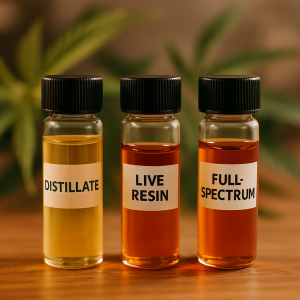
When selecting a thc liquid for vaping or cartridge use, the core decision is whether you prioritise cannabinoid purity, terpene-driven flavour, or a broad chemical profile that mimics the original plant. Distillate options are typically associated with high cannabinoid concentration and low non-cannabinoid content, while live resin and full-spectrum liquids aim to preserve terpenes and minor cannabinoids.
For patients and manufacturers, the trade-offs are practical: distillate often yields a more neutral, consistent base suitable for a pure thc liquid, whereas live resin and full-spectrum products retain more aroma and perceived entourage effects. That practical distinction guides everything from carrier choice to cartridge design and storage strategy.
Why distillate, live resin and full-spectrum differ in terpene and cannabinoid profiles
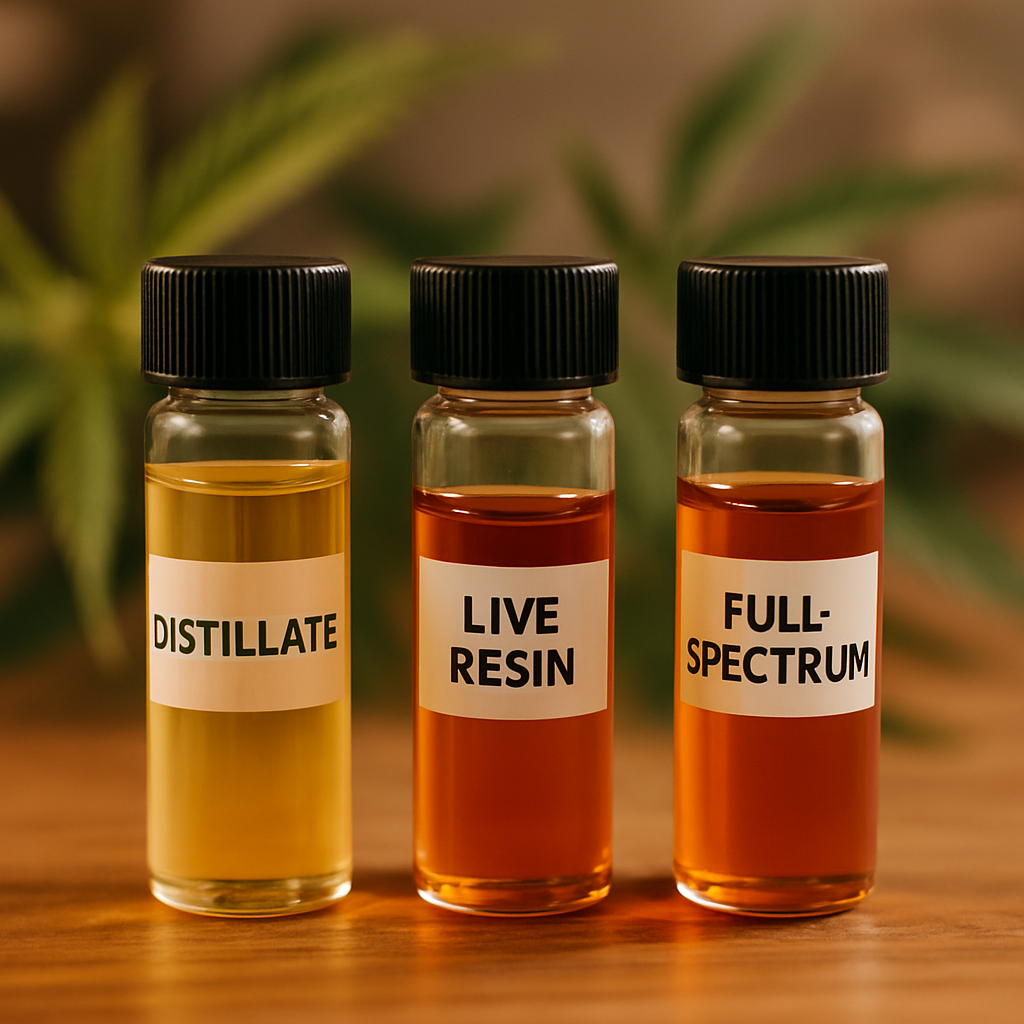
Distillate is produced via refinement processes that strip most compounds except the primary cannabinoids, creating a product that reads as near-pure THC or other cannabinoids on a certificate of analysis. That refinement delivers a predictable, potent concentrate that is often sold or formulated as a pure thc liquid for consistent dosing and discreet flavour.
Live resin, by contrast, is made from flash-frozen plant material and processed to retain a richer terpene spectrum and volatile compounds. The result is a liquid with pronounced aroma and flavour that many users prefer for sensory fidelity, though those same volatiles increase formulation and storage complexity compared with distillate.
Full-spectrum liquids attempt to balance both approaches by preserving minor cannabinoids and a representative terpene profile without the extreme refinement of distillate. This makes them a middle ground in viscosity and stability while offering more of the plant’s original chemistry than distillate does.
Extraction and refinement: how methods change usability and flavour
Extraction method sets the baseline for what needs to be refined. Hydrocarbon and solvent-based extractions can capture a wide terpene range and are commonly used to create live resin. Supercritical CO2 and steam methods can be tuned for selectivity, often leading to different carrier or mixing needs in the finished thc vape liquid.
Refinement steps such as winterization, decarboxylation and short-path distillation reduce fats, waxes and solvents to improve shelf stability and create the neutral base consumers expect from a thc e liquid or thc vape liquid. Each refinement step comes with a flavour cost; more aggressive purification reduces both impurities and desirable volatiles.
Understanding these steps helps product selection: if you want intense terpene character, choose live resin or full-spectrum formulations that underwent minimal terpene loss. If dose precision or near odorless delivery is the goal, distillate-based formulations are usually better suited.
Carrier ingredients, viscosity, cartridge compatibility and crystallisation risks
Carrier choice dictates viscosity and heating behaviour. Common carriers include botanical terpenes, medium-chain triglycerides (MCT), and refined cannabinoid diluents; each affects mouthfeel, wick saturation and the likelihood of crystallisation. Formulators balance carrier density so the liquid flows in common cartridge wicks but still vaporises cleanly.
High-potency, low-carrier formulations — often marketed as pure thc liquid — are more prone to crystallisation of cannabinoids, especially upon cooling or long-term storage. Crystallisation can clog cartridges and alter dose delivery, so manufacturers consider additives and controlled viscosity to minimise this risk.
Cartridge and packaging technology must match the liquid. Thinner liquids can leak in poorly designed hardware, while thicker live-resin blends can fail to wick in cartridges designed for distillate. Choosing compatible hardware and following manufacturer heating recommendations reduces device failures and preserves flavour.
Storage, stability and comparative product guidance for consumers
Proper storage slows terpene loss and crystallisation. Keep cartridges and bottles upright in a cool, dark place away from direct heat to maintain viscosity and terpene integrity. Refrigeration can sometimes be counterproductive because repeated temperature swings promote crystallisation, so steady, cool storage is preferable.
When comparing products, evaluate lab results for residual solvents, terpene content and cannabinoid potency. A distillate-based thc vape liquid will usually show high cannabinoid purity but fewer terpenes. Live resin and full-spectrum products will list higher terpene percentages and a broader cannabinoid profile, which informs both flavour and stability expectations.
For context on the primary psychoactive cannabinoid and why concentration matters in different extract types, consult the Tetrahydrocannabinol (THC) overview. That reference explains THC’s pharmacology and helps interpret potency reports on product labels.
Practical checklist for choosing and maintaining a THC liquid
Use this short checklist before buying or storing a product. These steps prioritise compatibility, safety and flavour retention without assuming brand claims:
- Match cartridge type to liquid viscosity and formulation.
- Check lab reports for terpene content, cannabinoid potency and solvent residues.
- Store products upright at steady, cool temperatures away from light.
In markets where regional terms matter, look for sellers who specify product style clearly — for example, those labelling a concentrated, refined offering as a distillate-based pure thc liquid, versus vendors highlighting terpene-rich live resin blends. In the UK and other regulated markets, phrasing like thc liquid uk or thc vape liquid uk may appear in product descriptions, but lab data should always be your primary guide.
Ultimately, the right choice depends on intended use: medical users seeking predictable dosing often favour distillate-based formulations, while consumers seeking flavour fidelity and a fuller chemical profile will prefer live resin or full-spectrum liquids. Considering extraction, carriers, cartridge compatibility and storage together reduces surprises and preserves product performance over time.